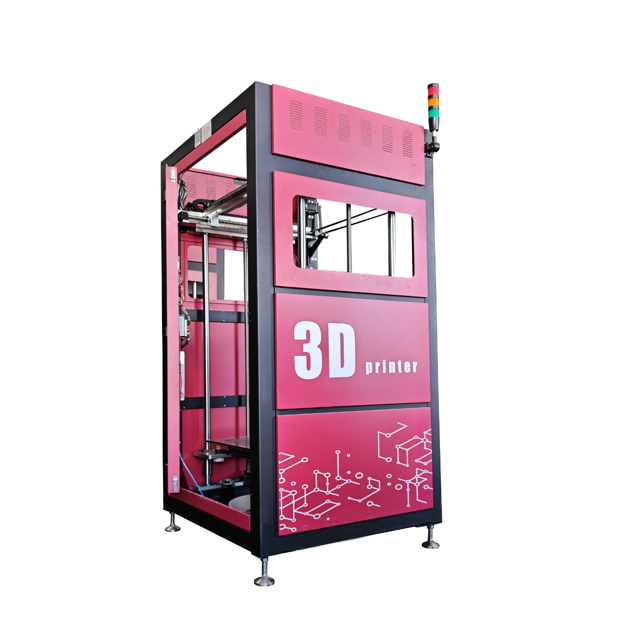

Introduction: From Traditional Manufacturing to Additive Manufacturing
In the fashion retail and display industry, mannequins have always been indispensable display props. Traditional mannequin manufacturing relies on injection molding and hand-carving processes, which are not only costly but also difficult to achieve personalized customization. With the rapid development of 3D printing technology, especially the maturity of FDM (Fused Deposition Modeling) technology, the fashion props industry is undergoing a profound transformation.
As a company specializing in industrial-grade FDM 3D printing, we use high-performance materials such as PP (Polypropylene) and TPU (Thermoplastic Polyurethane) to provide customized mannequin solutions for the fashion industry. This article explores the current applications, technical advantages, and future development prospects of 3D printing technology in the mannequin field.
I. Technical Advantages of 3D Printed Mannequins
1. Personalized Customization to Meet Diverse Needs
Traditional mannequins often use standardized sizes, making it difficult to meet the differentiated needs of different brands and markets. 3D printing technology can easily achieve:
-
- Size customization: Quickly adjust model proportions based on target market body data
-
- Posture customization: Print display models in various dynamic poses
-
- Surface treatment: Achieve different surface textures by adjusting printing parameters
2. Flexibility in Material Selection
In our production practice, TPU and PP are two core materials:
| Material | Characteristics | Application Scenarios |
|---|---|---|
| TPU | High elasticity, wear-resistant, impact-resistant | Joint areas requiring flexibility, soft body models |
| PP | Chemical corrosion resistant, fatigue resistant, low friction coefficient | Main structure, durable display models |
The high tension and high tensile strength characteristics of TPU material make it an ideal choice for making movable joints and soft mannequins; while the chemical stability and fatigue resistance of PP material ensure the long-term service life of the models.
3. Shortened Production Cycle and Reduced Costs
Traditional mold manufacturing requires weeks or even months, while 3D printing can:
-
- Rapid prototyping: From design to finished product in just a few days
-
- Small batch production: No expensive mold costs required
-
- On-demand production: Reduce inventory pressure and achieve zero inventory management
II. Analysis of Domestic and International Application Status
Domestic Market: Rapid Evolution from Concept to Implementation
China’s 3D printing industry is showing high-speed growth, with market applications extending from initial European and American daily necessities (such as floor drains, storage boxes) to trendy toys, footwear, helmets, and other functional devices. In the fashion props field:
-
- Fast fashion brands: Using 3D printed mannequins for new product displays
-
- E-commerce platforms: Using detachable, adjustable 3D printed models for product photography
-
- Custom clothing: Printing exclusive fitting models based on customer body data
International Market: Pioneer Applications in High-End Fashion
In the international fashion world, 3D printing technology has become an important tool for designers to realize their creativity:
-
- Pioneer designers like Iris van Herpen have brought 3D printed clothing to fashion weeks
-
- Luxury brands use 3D printed mannequins for window displays
-
- Sustainable fashion concepts promote the application of 3D printing in environmentally friendly materials
III. Core Advantages of FDM Process in Mannequin Manufacturing
FDM (Fused Deposition Modeling), as one of the most mature 3D printing technologies, has unique advantages in mannequin manufacturing:
1. Industrial-Grade Precision and Stability
Modern industrial-grade FDM printers can achieve:
-
- Layer thickness precision: Fine layer thickness below 0.1mm
-
- Dimensional stability: Consistency and precision control of large models
-
- Material compatibility: Support for various engineering materials such as PP and TPU
2. Convenient Post-Processing
FDM printed mannequins can be optimized through:
-
- Surface sanding: Obtain smooth display surfaces
-
- Spray painting: Achieve realistic skin tones and textures
-
- Component assembly: Modular design for easy transportation and installation
3. Environmental Protection and Sustainability
-
- Recyclable materials: Both PP and TPU can be recycled
-
- Reduced waste: Additive manufacturing reduces material waste by 90% compared to subtractive manufacturing
-
- Localized production: Reduce transportation costs and carbon emissions
IV. Future Development Trends and Outlook
1. Integration of Intelligence and Digitization
-
- 3D scanning technology: Quickly obtain body data and generate precise models
-
- AI-assisted design: Intelligent optimization of model structure and supports
-
- Cloud manufacturing: Distributed production network, serving customers nearby
2. Breakthroughs in New Material Applications
-
- Bio-based materials: Application of degradable environmentally friendly materials
-
- Composite materials: Multi-material composite printing to achieve functional zoning
-
- Smart materials: Application of temperature-sensitive, light-sensitive and other responsive materials
3. Industry Chain Integration
-
- Integrated solutions for design-printing-post-processing
-
- B2B customization platform: Online ordering, fast delivery
-
- Rental service model: Reduce customers’ one-time investment
V. Our Solutions
As a professional industrial-grade FDM 3D printing service provider, we offer:
 1.75mm high-quality filament: Ensuring printing precision and surface quality Large-size printing capability: Meeting life-size model requirements Material diversity: TPU soft materials + PP hard structures Fast delivery: From design to finished product, 7-15 days delivery Cost advantage: 30-50% cost reduction compared to traditional manufacturing
Our 3D printing filaments feature:
-
- High dimensional accuracy: ±0.02mm tolerance control
-
- No clogging: Smooth printing, reducing downtime
-
- High strength: Meeting industrial-grade usage requirements
-
- Smooth surface: Reducing post-processing workload
Conclusion: Embracing the Future of Additive Manufacturing
3D printing technology is reshaping the production model of the fashion props industry. From standardization to personalization, from mass production to on-demand customization, from traditional manufacturing to digital manufacturing—this transformation is not only about technology but also about innovation in business models.
For fashion brands, retailers, and prop manufacturers, now is the best time to embrace 3D printing technology. By adopting FDM 3D printing technology, companies can achieve:
-
- Faster market response speed
-
- Lower inventory and production costs
-
- Higher product differentiation
-
- More sustainable production methods
The future is here. Let’s witness the infinite possibilities of 3D printing technology in the fashion mannequin field together!
 Tags: 1.75mm Filament, 3D Print Consumables, 3D Printer Filament, 3D Printing Material, 3D Printing Supplies, Dimensional Accuracy, Durable Filament, FDM Filament, High Quality Filament, No Clogging, Smooth Printing, Strong Filament
 Explore our full range of 3D printing products:
 https://3d-printerfilament.com/product-category/full-range-of-3d-printing-products/
Leave a Reply