Description
# PP 3D Printer Filament
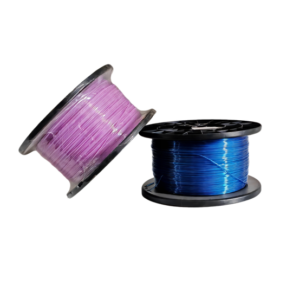
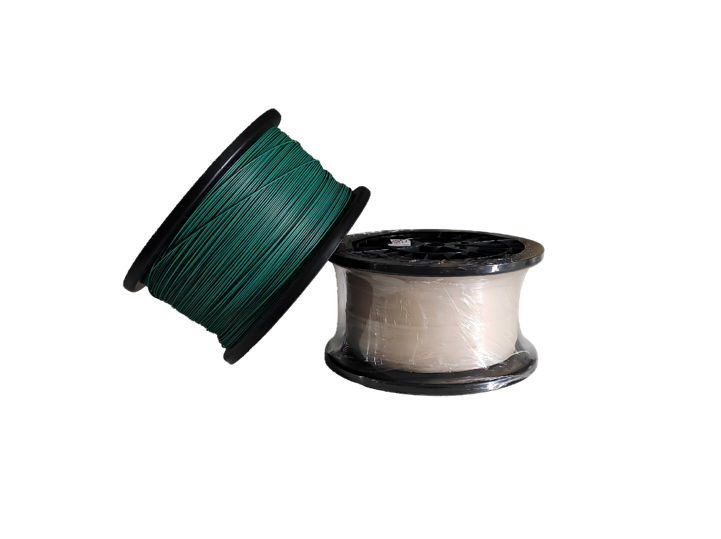
Our self-developed 3D printing filament is manufactured with premium quality and flexible full customization capabilities.
With a standard 1.75mm filament diameter, our precise dimensional control ensures stable printing process and high finished-product accuracy, making every print run highly reliable and consistent.
Both material properties and filament colors can be fully customized according to your specific requirements. Whether you need special material performance upgrades or personalized color matching solutions, we can fully meet your diversified needs, supporting you to realize all kinds of creative 3D printing projects.
Each spool comes with a large 4KG net weight, which greatly reduces frequent filament replacement and effectively improves your continuous printing efficiency. The standard reel specification is: 300mm diameter, 170mm height, and 35mm inner hole size, perfectly compatible with mainstream FDM 3D printers.
For global FDM 3D printing users and bulk wholesale buyers, our self-developed PP filament is the ideal stable consumable choice. We support flexible customized services for bulk orders, including customized material formula, exclusive color matching, and adjustable spool specifications according to your business needs.
With strict quality control on every production link, we guarantee consistent wire diameter stability, low printing deviation and reliable batch-to-batch uniformity for every spool of filament you receive. Choose our premium PP 3D printing filament to upgrade your 3D printing projects with stable, durable and customizable performance.
All of our filament products are produced under strict factory quality control, ensuring stable performance and consistent quality for every single spool delivered to our global customers.
We keep full strict quality inspection on each production batch, to guarantee stable printing experience for every global buyer.
🔥 Core Comparison | Choose the Right Filament to Avoid Pitfalls
✅ PP Filament (Top Choice for Industrial Applications)
✅ High Toughness & Flex Resistance | Suitable for living hinges and snaps; withstands repeated bending without cracking
✅ Heat Resistance over 100℃ | No deformation in vehicle interiors or heat-exposed environments, far superior to PLA
✅ Waterproof, Corrosion & Moisture Resistant | Non-absorbent, acid and alkali resistant; ideal for humid and chemical environments
✅ Ultra-Lightweight | Lower density than PLA, perfect for printing onboard and portable devices
✅ Food-Grade Safety | Non-toxic raw material, applicable for storage parts and medical auxiliary components
⚠️ Note: Temperature calibration is required for printing; nozzle temperature needs to be slightly higher than PLA.
✅ PLA Filament (Best for Beginners)
✅ Beginner-Friendly | Prints easily at low temperatures, minimal warpage, extremely high printing success rate
✅ Eco-Friendly & Odorless | Plant-based material, safe for indoor and classroom use
✅ Excellent Surface Finish | Smooth surface with rich color options, ideal for figurines and ornaments
⚠️ Limitations: Softens easily at 60℃, brittle and prone to breakage, poor moisture and corrosion resistance.
📌 Specifications of Our Store’s PP Filament (Direct Compatibility)
Standard Diameter: 1.75mm, 2.85mm customizable
Spool Weight: 6.65~4.85kg (including spool; spool itself weighs 0.6~0.65kg)
Spool Dimensions: 300mm diameter, 170mm height, 35mm inner hole
Compatibility: All standard FDM 3D printers
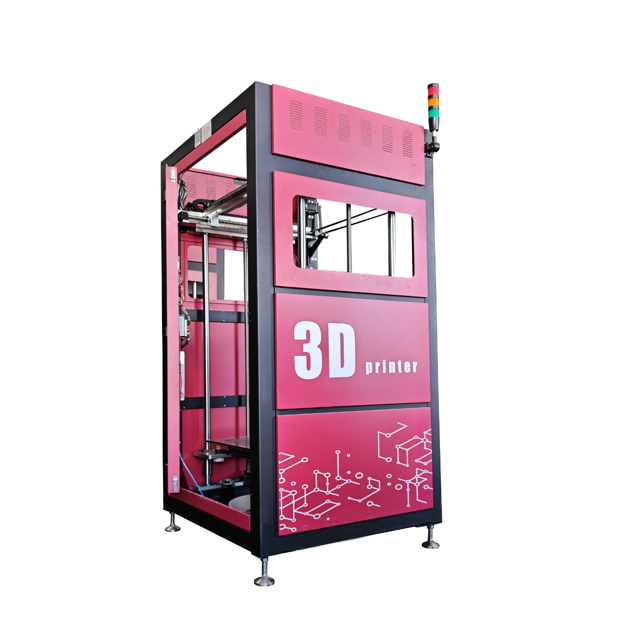
📌 We possess over 600 independently manufactured large-scale industrial 3D printers, and professionally undertake customized 3D printing services for clients worldwide.
Our core products are high-end mannequins. We have been a long-term model supplier for international premium apparel brands such as Adidas, with our product quality highly recognized across the industry.
All models are printed with our self-developed and self-produced 3D printing filaments, whose strength and performance have passed rigorous tests.
Below are real-site photos of our printing workshop and partial finished products for your reference.